Maple Grove projects
On the Come UpMaple Grove projects is a west-side housing complex that Brianna Jackson describes as a world apart from the east side of Garden Heights. Its proximity to the freeway, deteriorating buildings, and repurposed open spaces make it both a home for residents and a sharply visible expression of the neighborhood’s uneven conditions.
Setting and Physical Layout
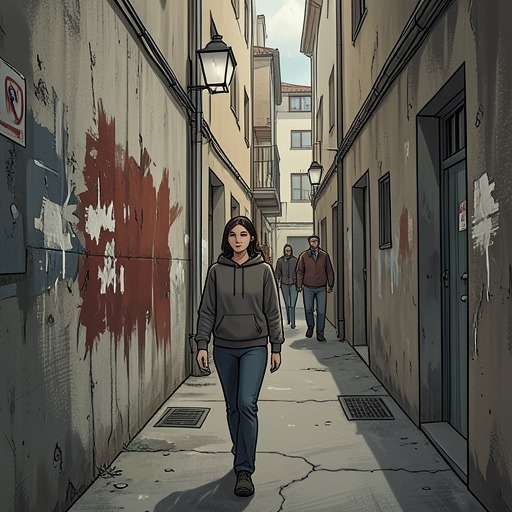
Brianna contrasts the projects with her east-side neighborhood, where houses are nicer, homeowners are older, and gunshots are less frequent. Maple Grove is only a fifteen-minute walk away, but it appears more often in the news, and many of its houses look unfit for habitation. The distance is short; the divide in safety and material conditions feels much larger.
The complex consists of six three-story buildings close to the freeway. Aunt Pooh recalls that people once went onto the rooftops to throw rocks at passing cars. A seventh building burned down several years earlier; instead of rebuilding it, the state demolished it, leaving a grassy field where children now play. The playground, by contrast, is used by people struggling with addiction. The empty lot and the divided uses of the remaining outdoor spaces show how neglect has altered the place without removing the need for communal space.
Courtyard and Community
The courtyard is mostly dirt because residents park cars there. When Brianna arrives, Aunt Pooh and Scrap are sitting on a car, while Scrap eats cereal from a mixing bowl and talks with other Garden Disciples standing nearby. The scene presents the courtyard as an informal gathering place shaped by practical use: cars take the space, and people gather around them.
The neighborhood also recognizes Brianna through her father, Law. A man in a ragged car calls out to her as “Li’l Law,” although she has never seen him before. She waves, understanding that she remains her father’s daughter in the eyes of people there. That recognition makes the projects a place of inherited connection as well as hardship.
Narrative Significance
Brianna’s comparison between the east side and Maple Grove resists treating one part of Garden Heights as safe simply because another is rougher. She likens the distinction to choosing the safer side of the Death Star: relative differences do not make the larger environment secure. The comparison gives the setting a compressed, vivid measure of the danger and deprivation that span the neighborhood.
Maple Grove is also tied to immediate family strain. As Brianna crosses its parking lot, she thinks that her father should be there and wonders how the family will manage while Jay has no job. The setting therefore connects public conditions—damaged housing, neglected facilities, and visible hardship—to Brianna’s private uncertainty about money, family, and the absence of her father.